
Many organisations say they value transparency. They publish ethical guidelines, create governance structures and communicate their values publicly. Yet many organisations still struggle with one fundamental question: Why is trust so difficult to achieve?
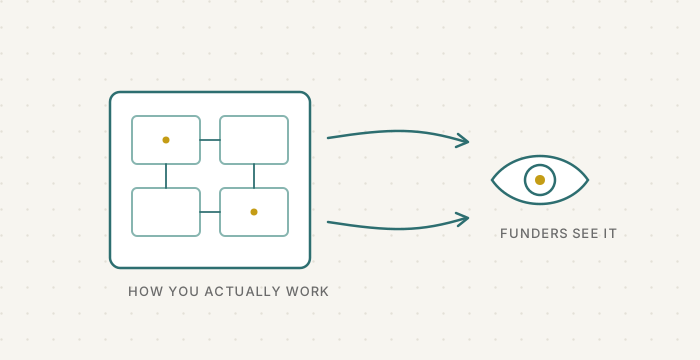
The answer often lies in how transparency is understood. Transparency is frequently treated as an external communication strategy — something organisations show to the outside world through reports, statements or public messaging. But transparency does not start outside. Transparency starts inside the organisation.
This idea is captured in the Vedomia Transparency Model, which explains how internal transparency enables external transparency and ultimately creates organisational trust.
The Vedomia Transparency Model
The model describes transparency as a layered system. Each layer enables the next.
At the centre lies internal transparency — the clarity of how the organisation actually works. This internal clarity makes external transparency possible. When both exist, organisations become understandable, and trust emerges naturally.
Internal Transparency
Internal transparency refers to the visibility of the organisational system from the inside. People working within the organisation should understand how the system operates and how decisions are made.
Key elements of internal transparency include:
- Information flow clarity
- Fair communication
- Process visibility
- Decision pathways
When internal transparency is in place, people can locate themselves within the organisation, understand their role, and trust that the system is coherent. This is not about surveillance — it is about structure.
External Transparency
External transparency is what stakeholders outside the organisation can see and understand. It includes reporting to funders, public communication, regulatory compliance, and accountability to communities served.
External transparency is only meaningful when it reflects an internally coherent system. If the inside of the organisation is unclear, external reporting becomes a performance rather than a reflection of reality.
Why Trust Follows
Trust is not built through communication campaigns. Trust is built when people — both inside and outside an organisation — can follow the logic of how decisions are made and actions are taken.
When internal systems are clear and that clarity is honestly reflected externally, organisations become understandable. And understandable organisations are trusted organisations.
Transparency is not what you say about yourself. It is the degree to which others can understand how you actually work.
Interested in how the Vedomia Transparency Model could apply to your organisation?
Get in touch with us